The One-Way Ticket Home
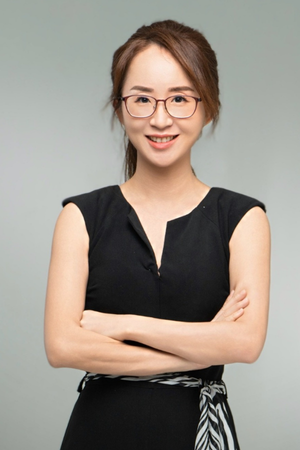
Author: Michelle Hoo
Company: Clinic 365 / Meditiara Clinic
Position: Managing Director
I can’t remember the last time Dad called my name.
I wish I could.
After his second stroke, he never spoke another full sentence again.
Dad had his first stroke on the first day of Chinese New Year. At the time, I was in the UK, in the final year of my PhD.
I bought a ticket home to Malaysia.
There was no return ticket.
A little over a year later, Dad had his second stroke. This time, he lost the ability to speak and move. He had to be fed through a Ryle’s tube.
His mind was still completely aware. He could see us. He could hear us. He understood what was happening around him.
But he could no longer tell us what he wanted, what hurt, what he was thinking, or what he was afraid of.
He was trapped inside his own body.
That became his life for ten years and nine months.
Slowly, Dad became someone I barely recognised.
He would stare at the ceiling for hours. Sometimes he cried. Sometimes he would suddenly become angry. At his lowest point, he even tried to take his own life.
He had lost more than his mobility.
In many ways, he had lost the person he used to be.
The stroke had damaged his brain, but there was also the emotional shock of suddenly losing his independence, his identity and control over his own life.
Eventually, he developed anxiety and depression.
Caring for a bedridden father who was also struggling with anxiety and depression was never easy.
Because I had chosen to come home, I thought I should be patient.
I should be strong.
I should be able to control my emotions.
I should never get tired of taking care of my own father.
But I did.
Whenever I lost my patience, I blamed myself.
Why couldn’t I control my own emotions?
Why did I still feel that I wasn’t doing enough, no matter how hard I tried?
I started to feel like I was failing him as a daughter.
For a long time, I thought I simply wasn’t strong enough.
It took me much longer to realise that somewhere along the way, I had fallen into depression too.
In those early days, I would often sit beside Dad’s bed and look at him.
And I kept asking myself:
What if I were the one lying there today?
If my body could no longer move, but my mind was completely awake, I knew I would replay my life again and again.
Would I have regrets?
Would I look back and realise that I had spent my whole life being busy, but had never really lived?
Had anyone’s life become a little better because I had been here?
Had I contributed anything at all—to another person, to society, to the world?
That was when I started writing my own Bucket List.
It wasn’t a list of dreams.
It became a list of things I wanted to do and contribute before I left this world.
A life mission list.
The first was music.
I’ve loved writing songs since I was a child.
Whenever I make music, I lose track of time. I become completely absorbed in it. There is a kind of fulfilment I get from music that is difficult to explain.
Sometimes, when a melody or lyric comes to me, it doesn’t even feel like I wrote it.
It feels as though I simply received it, and music is the way it comes through me.
But for years, I kept putting music off.
“After I graduate.”
After university.
After my master’s.
After my PhD.
Music was always something I would do later.
Dad’s stroke made me realise that none of us knows how many “laters” we have left.
The second thing on my list was to change the way people think about health.
Everything Dad and our family went through made me question so many things.
What if he had known earlier how to take better care of his health?
What if our healthcare system placed more emphasis on prevention instead of waiting until someone became sick before stepping in?
Would our family’s life have been completely different?
I started wondering why we wait until people are sick before we teach them how to stay well.
I slowly realised that this was bigger than Dad, and bigger than our family.
Something about the way we approach health needed to change.
At the time, I had no idea what I could do about it.
I didn’t have a plan.
I just believed that if the intention to help was genuine, somehow, when the time was right, I would find a way to contribute.
Health was already on my list, but I still had no idea what my role in it would be.
Before that answer came, life took me somewhere completely unexpected.
The third mission came almost by accident.
During that period, I was watching the news every day.
I saw people peacefully asking for free and fair elections being arrested, beaten and driven away with tear gas.
I watched politicians use race to create fear and hatred and divide Malaysians from different communities.
That was not the Malaysia I wanted the next generation to inherit.
I was angry.
I complained.
But after a while, I realised that being angry and complaining while watching nothing change wasn’t enough.
So I asked myself:
What can I contribute?
I knew nothing about politics.
I didn’t know any politicians.
The only thing I knew how to do was write songs.
So I wrote The Tears of Malaysia.
I reached out to a group of musicians and told them:
“I’m scared too.
But if all of us stay silent because we’re scared, then nothing is ever going to change.
I’ll write the lyrics and music. I’ll make the MV.
If the police come, I’ll deal with them.
You just have to be willing to stand with me.”
Slowly, more and more people joined us.
It started with a few musicians. Then Malaysians from different races and backgrounds began coming forward.
One song slowly grew into a grassroots movement.
And somehow, the girl who had never cared about politics ended up being called a political activist.
At the time, I didn’t even really know what that meant.
Even today, I’m still not interested in politics itself.
What I care about is a better Malaysia.
A Malaysia where people can speak their minds without being afraid of what might happen to them for doing so.
I was simply trying to do my part.
And I still believe that when enough ordinary people each do the little bit they can, those little things stop being little.
Years later, when that chapter felt complete, I found my way back to the health mission I had written down much earlier.
Dad’s journey—from stroke and paralysis to anxiety and depression—had made one thing very clear to me:
When one person becomes seriously ill, it is never only that person’s life that changes.
The whole family changes with them.
And what made it even harder was knowing that some illnesses could have been detected earlier, prevented earlier, or sometimes even avoided.
That was what eventually led me into healthcare.
It became the reason I later started Clinic 365 and Meditiara Clinic.
I don’t want healthcare to begin only after someone becomes sick.
I want healthcare to reach people before disease does.
I want people to understand their bodies and start looking after their health before something goes wrong.
Instead of waiting until the question becomes:
“Where should I go when I’m sick?”
I want us to start asking much earlier:
“What can I do today so that my future self and my family don’t have to suffer from something that could have been prevented?”
If what we do can help one family live with one less regret and a few more years together;
if fewer children have to grow up beside a hospital bed;
if more parents can stay healthy enough to be there for their children a little longer, and then a little longer still;
then what Dad went through will not remain only as our family’s pain.
Maybe it can also become the beginning of change for another family.
Did I plan any of this?
Not at all.
If life had gone according to my original plan, I might have completed my PhD.
Dad’s stroke was not part of my plan.
Leaving my PhD unfinished was not part of my plan.
Depression was not part of my plan.
Neither were activism and healthcare.
But when I look back now, many of the things I once saw only as losses somehow led me to where I am today.
And throughout all of this, I often think about my mother.
She grew up in a generation where women were expected to be gentle, obedient and willing to sacrifice themselves for their families.
But she never passed those limitations on to me.
Growing up, she always told me:
“A woman can be even more capable than a man.”
And I believed her.
From a very young age, I never saw being a woman as a limitation. In fact, I often felt I was stronger and more capable than many of the men around me.
She wasn’t teaching me to compete with men.
She was teaching me never to make my life smaller simply because I was a woman.
My mother gave me the confidence to believe in myself.
Dad’s experience showed me where that strength needed to go.
So if you are reading this while going through loss, disappointment or uncertainty;
if life has taken you somewhere completely different from where you thought you would be;
if you are drowning in anxiety, self-blame or emotions, asking yourself again and again:
“Why me?”
I want to tell you this gently.
You don’t have to force yourself to be strong.
Be sad if you’re sad.
Be angry if you’re angry.
And if you don’t know what comes next yet, that’s okay too.
I’m not going to sugarcoat life and tell you that every hardship is a gift.
Sometimes something painful is simply painful.
Loss is loss.
Pain is real.
But pain doesn’t have to be the only thing we carry forward.
Sometimes, the things we lose force us to stop. They make us question everything we thought mattered.
They make us ask why we are here, and what we actually want our lives to mean.
Some roads feel like detours while we are walking through them.
Only years later, when we look back, do we realise that those roads quietly changed the way we see life and took us somewhere we never imagined we would go.
What breaks your heart today may one day be the reason you recognise someone else’s pain without her having to explain it.
It may be the reason you know how to sit beside her.
How to understand her.
How to hold her hand when she feels she cannot go on.
And perhaps, one day, how to become the light she needs when she cannot see her own way forward.
Like many of the women whose stories are part of She Rises, none of us became who we are entirely on our own.
Behind us are the mothers whose words, strength and sacrifices shaped us.
And in front of us are our daughters, watching us and learning from the way we choose to live.
As we find our own way, we are also showing them theirs.
My life mission list is still in progress, one mission at a time.
And if one day I am the one lying there, looking back on my life, I know what I hope I’ll be able to tell my daughter:
“I loved deeply. I kept learning. I truly lived. And in my own small way, I tried to leave this world a little better than I found it.”
I hope she remembers that none of us gets here entirely on our own.
Somewhere along the way, someone held up a light for us.
And when one day she finds herself standing in the light, I hope she remembers to turn around and hold it up for someone else.