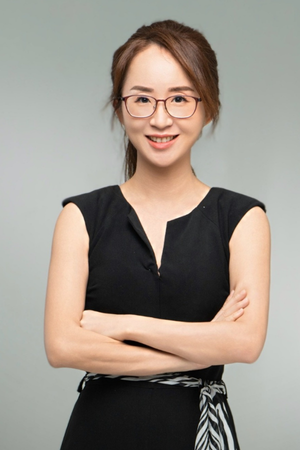
Author: Michelle Hoo
Company: Clinic 365 / Meditiara Clinic
Position: Executive Director
《A One-Way Ticket That Changed My Life》
I can no longer remember the last time my father called my name. Later, he could no longer speak a complete sentence. In early June 2009, my father suffered his first stroke. At the time, I was in the United Kingdom completing the final year of my PhD. I bought a ticket back to Malaysia, believing that after everything settled down, I would return and continue the life I had planned. But that ticket turned out to have no return journey.
A year later, my father suffered a second stroke. He lost his ability to speak and move, and could only be fed through a nasogastric tube. His mind remained conscious, but he was trapped inside a body that could no longer respond. That condition continued for nineteen years. He would stare at the ceiling and cry. At times, he was angry; at others, overwhelmed by despair. Watching him live that way slowly changed me too. I thought I had to be strong and patient, and whenever I failed to remain calm, I blamed myself. Only much later did I realise that somewhere along the way, I had fallen into depression as well.
During those years, I often sat beside my father’s bed and asked myself: If the person lying there were me today, what would I regret not having done with my life? That question changed the way I looked at time. I stopped asking only what I had lost and began asking what I still wanted to leave behind. So I wrote a bucket list—not a list of dreams to postpone, but a list of missions I wanted to fulfil while I was still alive.
The first item was music. I had always loved music, yet I kept telling myself, “Maybe later.” My father’s stroke made me understand that none of us knows how many “laters” we actually have. Eventually, I wrote a song called Tears. What began as something deeply personal slowly became a charity initiative. It taught me that when each person contributes the little they do best, those small efforts can eventually gather into meaningful change.
Another mission was health. I began asking myself: what if we could intervene earlier instead of waiting until illness appears before seeking treatment? Would some families be spared the regret and long years of caregiving that mine had experienced? That question became part of the founding purpose behind Clinic 365 and Meditiara Clinic—to place greater emphasis on prevention and help more families reduce avoidable suffering.
I never completed my PhD, nor did I ever imagine that my path would lead me into healthcare and social initiatives. Looking back, however, the things I once thought I had “lost” were also the experiences that brought me to where I am today. My mother had always told me, “A woman can be just as capable as a man.”** Because of her, I grew up believing that being a woman should never make me reduce the possibilities of my own life.
If you are experiencing loss, setbacks, or confusion today, I will not tell you that every hardship is a gift. Loss is still loss, and pain is real. But pain does not always have to leave only a wound. Sometimes, what brings us to tears today may one day become the reason we understand another person more deeply, care for someone more compassionately, or become a light when another person needs it most.
If one day it is truly my turn to lie there, I hope I will be able to tell my daughter: “I have truly loved, learned and lived. And I know that, in my own small way, I left this world a little better than I found it.”
There were people who once carried a light for me when I needed it most. I hope that one day, when I have the strength, I can turn around and light a path for someone who is still walking through the dark.
— Michelle Hoo